
When hardwood floors undergo significant wear and tear, they can appear a little rough around the edges. Water stains, scratches, and dull or orangeish tones can start to emerge. The question is whether you should stick with re-staining or refinishing wood floors.
You’ll have options when modernizing your home with a new wood refinish:
- Screening and refreshing
- Full sanding and staining
- A full floor replacement
Both hardwood floor refinishes and re-stains come with a unique set of benefits and challenges. So, how do you know which is right for your home?
Let’s take a closer look.
Option 1: Screening and refreshing the polyurethane (buff and coat)
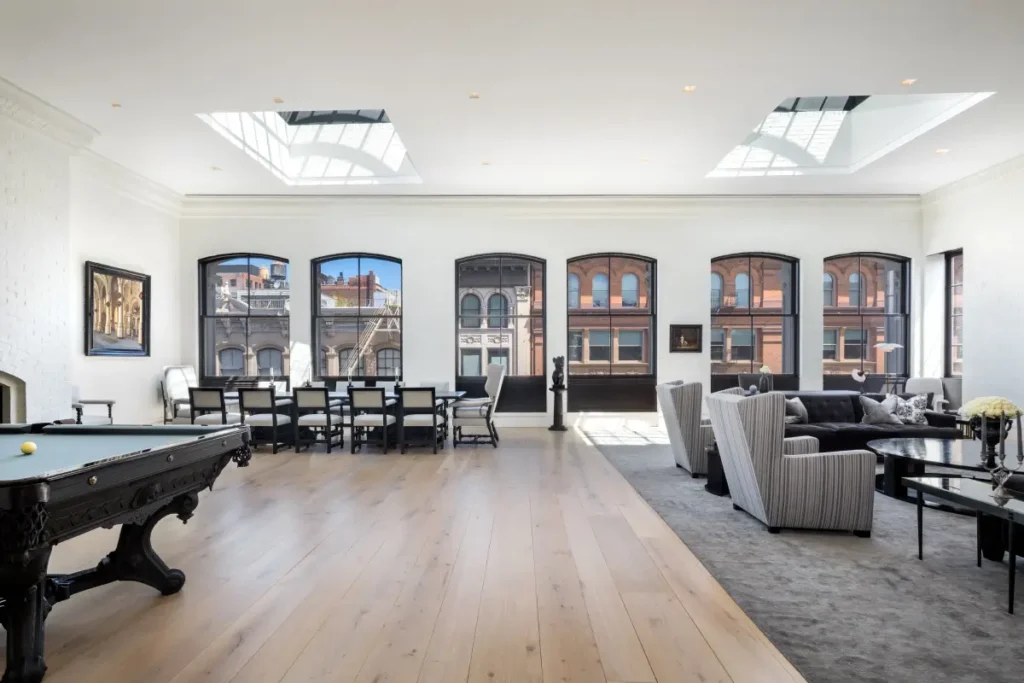
Your first option for updating your floors is screening and refreshing them. With this process, a light abrasion, or screening, of the existing polyurethane topcoat is followed by applying a new finish.
No sanding down to bare wood, and no stain changes are needed.
Screening and refreshing help get rid of scratches, smudges, stains, or dents that can be smoothed and removed. In other words, your construction and custom renovation team will go to work to give your floor a new, refreshed look.
Screening and refreshing a floor make sense in the following situations:
- When floors are structurally sound
- No deep scratches or pet stains exist
- The existing color of the floor is intact
- The finish of the floor is dull but not worn down to the raw wood
Screening and refreshing is often the most cost-effective option, includes minimal dust, can be completed quickly, and extends the life of existing floors by up to a decade.
Nevertheless, you won’t be able to change the stain color, fix deep gouges or discolorations, or correct cupping and movement issues.
If the existing floor has wax, oil-based contamination, or a different coating, issues can arise. A screen and refresh is recommended for those who own well-maintained floors that need a touch-up, not necessarily a complete makeover.
Option 2: Full sand, stain, and refinish

A full sand, stain, and refinish involves sanding down the floor to the raw wood, removing the existing stain and finish, and adding coats of polyurethane or modern water-based finishes.
A full sand, stain, and finish makes sense if you’re looking to modernize the color of your floors, get rid of visible wear and tear, and want to give your floor a full makeover without replacing it outright.
Some of the advantages of a full sand, stain, and refinish include the following:
- A full sand, stain, and refinish updates the home
- It removes most surface-level damage
- Allows for color changes
- It’s far less expensive than replacing floors
- Adds a touch of modernization to the entire home
Nevertheless, some of the disadvantages of a full sand, stain, and refinish include the following:
- Deep stains may remain visible
- Improper sanding can create aesthetic anomalies like waves
- Older floors may reveal patchwork or color inconsistencies once the floors are sanded
A full sand, stain, and refinish is best for hardwood floors that are well-built but feel dated.
Option 3: A full floor replacement
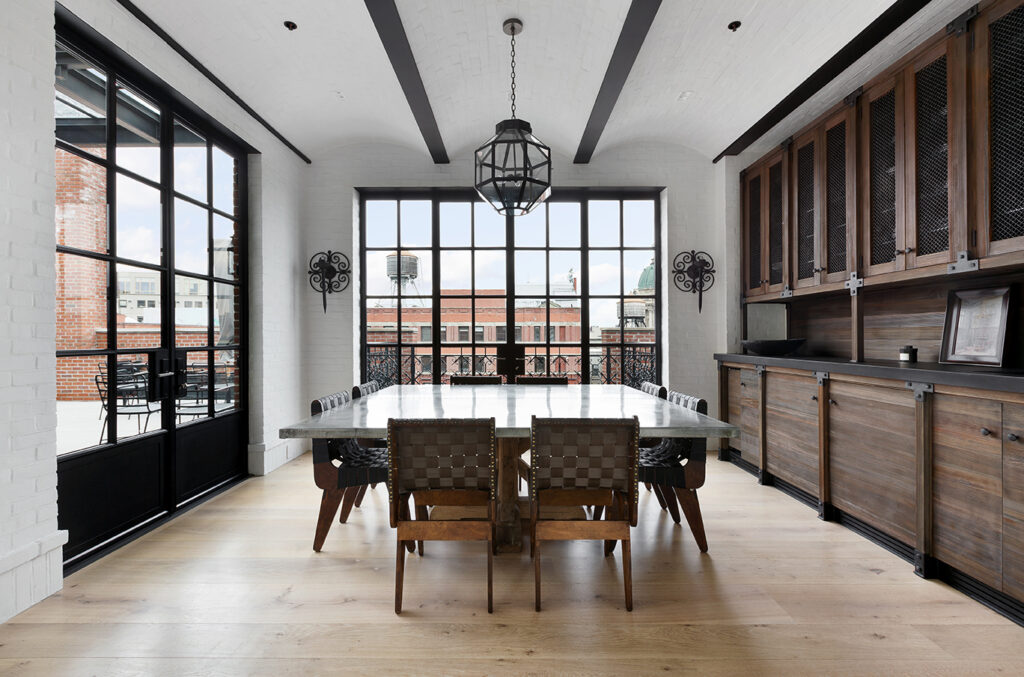
A full rip-out and floor replacement involves completely removing the existing flooring and installing new hardwood floors. Doing so is a wise choice if your floor is damaged, needs layout changes, or slopes at different levels throughout your home.
But, if you opt for a full floor replacement, you’ll be able to design your floor as you wish, upgrade to wider planks, improve the subflooring and insulation, and improve the resale value of your home.
Nevertheless, full floor replacements are the most costly and time-consuming of the options available. They may also affect the structures and transition spaces of other parts of your home.
A full floor replacement is appropriate for a full-scale home renovation. Also, if you decide you want to change the layout or aesthetics of other parts of your home, a full floor replacement may be the best option.
Refinishing versus re-staining wood floors: Advantages and disadvantages
| Advantages😀 | Disadvantages🙁 | |
| Refinishing wood floors | 1. Removes stains, dents, and color imperfections 2. Longer-lasting than re-staining wood floors 3. You can adjust the color and style of the finish | 1. More costly than re-staining wood floors 2. Takes longer than re-staining a wood floor 3. Somewhat noisy |
| Restaining wood floors | 1. A quicker solution 2. Less noise | 1. Won’t fix deep dents, stains, smudges, or alterations 2. Less durable 3. Limited options for changing the color and style of the finish |
What should you consider when deciding between refinishing or resurfacing wood floors?

If you’re going back and forth between refinishing and resurfacing your wood floors, you’ll want to keep in mind a few factors that could affect your decision:
- Timing and frequency of your floor treatments
- Cost of the job
- Aesthetic changes and the amount of noise disruption
- Switching to matte or satin finishes
- Neutralizing warm undertones
- Moving toward natural white oak aesthetics
- Increasing the plank width of your floorboards
- Using water-based polyurethane for a more durable floor
Scordio Spotlight: Tribeca penthouse hardwood floors

Check out the work we’re doing at the Tribeca penthouse. We brightened up with new wood floors, millwork, wall finishes, and lighting.
Our refresh had a major impact.🌇✨Check out our progress as we prepare for demo day.
How to choose between a wood floor resurface and refinish

Deciding between refinishing and re-surfacing wood floors comes down to several factors:
- The condition of your floors
- Your budget
- Your aesthetic preferences
- Comfort level with durability
Familiarizing yourself with the above-mentioned factors will position you for success on your next floor renovation.
At the end of the day, refinishing wood floors can add huge value to your home. It can:
- Brighten the interior of your home
- Modernize its aesthetic
- Increase its resale value
- Extend the lifespan of the existing space
At the end of the day, we can’t emphasize enough that you should always consult with a professional or luxury construction firm.
A luxury construction firm, in particular, can provide a professional evaluation so that you don’t overspend or underinvest in your floors. If you’re in the New York City area and looking to update your floors, we invite you to get in contact with us.
We have more than 40 years of experience building, refurbishing, and refinishing hardwood floors in luxury residences across New York City.
Have a question? We have an answer. Need a second opinion? We also have an answer for that.
Contact us at (718) 369-0500 or scordio@scordio.com for a complimentary consultation on your next home and floor renovation.
Scordio Construction, Inc.: Modern Construction and Timeless Finishes in NYC Since 1985

- Need-to-Know Information About Refinishing Wood Floors (in NYC) - February 28, 2026
- How to Make Stained and Oak Kitchen Cabinets Look Modern - January 30, 2026
- What Makes a Door Fire-Rated in Home Construction (NYC Edition)? - December 31, 2025