Architects and homeowners: the construction industry is quietly changing before our eyes. The amount of residential construction has been on the rise over the last two decades (Federal Reserve Economic Data (FRED), 2024). As new trends emerge, providing home construction value and engineering solutions is key to a successful home build. But, what is value engineering in construction? And why is being familiar with this value engineering in construction important, given recent building trends?
Scordio Construction, Inc. here: for more than 40 years, we’ve been one of New York City’s most trusted high-end residential luxury construction builders.
We’d love to share what’s important to note about construction value engineering so you experience a seamless and smooth home construction process. When executed correctly, the process of value engineering ensures that a finished luxury home reflects the highest quality and craftsmanship, while remaining in line with budgets and timelines.
Curious to find out what value engineering in construction is? Let’s explore it together.
In this article, we’ll discuss:
- Where the term “value engineering” originates
- Key times before, during, and after the construction process to use value engineering
- The 6 parts and steps of value engineering in construction
- How a high-end luxury construction company approaches value engineering
The 6-step process of value engineering in construction

| 1. Gathering information and making plans 2. Analyzing the functionality of a build 3. Creating new ideas for proposed plans 4. Assessing potential, alternative ideas 5. Conducting a thorough cost analysis 6. Developing a final comprehensive plan |
Where the term “value engineering” comes from

Alas, many people hold misconceptions about value engineering. Many people think that value engineering in construction is about cutting corners and costs and tearing apart an architect’s plans.
This notion couldn’t be farther from the truth.
In fact, when done right, value engineering in construction can lead to many positive outcomes for homeowners, architects, and building teams. When everyone participates in value analysis, benefits win out, and everyone’s creativity can be used to meet timelines and goals.
So, where did the term value engineering come from? Let’s take a walk down memory lane.
Almost 100 years ago, a designer at General Electric named Lawrence D. Miles was working on a manufacturing job where he was required to find an alternative to a product under his guise. General Electric was short on materials due to material shortages in World War II, meaning Miles had no other choice but to look for an alternative to the design he used.
Thus, while he was working on a new design, he looked for different ways to make the product cost-effective and better. And the result?
Value analysis — also known as value engineering — was created as a result of Miles’ work. Since it first began, value engineering has been adopted by many industries and has been used in innumerable ways.
In construction, value engineering is used to solve problems, identify issues, eliminate costs, and improve functionality and quality. As such, value engineering is built to optimize initial and long-term investments.
With Scordio Construction, we use value engineering to deliver cost-effective, luxury construction services and finished products that don’t skimp on efficiency and timeless quality.
In other words, the best of the best at the lowest possible cost: that’s what value engineering is all about.
The best times to use value engineering in construction
“So, how are value engineering decisions made? And, when’s the best time to use value engineering and value management?” You might be wondering.
The short answer is during the design and planning stages, but the truth is that there’s no wrong time to conduct value engineering in construction. The goal of value engineering is to help improve projects rather than rework or delay them.
So, if value engineering is no longer beneficial to a project, value engineering may not be needed. Some examples of when to use value engineering include:
- Safety: if using value engineering helps improve the well-being, health, and safety of the team, project, and build, it should be used.
- Building code changes: if value engineering would help avoid violating building codes, it should be used.
- Financial gain: if value engineering creates a better living experience and delivers a financial opportunity, by all means explore value engineering techniques to provide added value for the project.
In other words, value engineering is a methodology that ensures owners don’t overpay for a luxury home while also providing less expensive options for the same timeless quality. Quality is never sacrificed in the value engineering process.
6 steps for better value engineering in construction
“Does a process exist for value engineering in construction?” is a question we’re often asked by our clients. Yes, it does.
Value engineering in construction involves a group of project specialists like architects, designers, and subcontractors (such as estimators and millworkers).
Like a rowing boat team, everyone on a value engineering team plays an integral role.
Just like rowers in a boat, all members of the team must work together to make it to the finish line by delivering a home that offers maximum value with minimal waste.
For example, whether a team member wants to substitute one material or process for another, the team will work together to consider whether the alternative building methods will meet and exceed industry standards while providing the best possible value in the process that meets the original design intent.
To make the process — and your understanding of value engineering solutions — more concrete, let’s explore the six steps of the value engineering process as they relate to luxury home construction.
1. Gather information and plan
One of the first steps in the process of value engineering is identifying project goals, which materials are needed, and refining the overall scope of the project.
- Collecting data
- Gaining a clear understanding of the project
- Determining schedules and costs
- Reviewing and scrutinizing drawings and specifications
- Who will be responsible for each aspect of the project
The bullet-pointed processes mentioned above are just a few examples of what’s included in the first step. Once you’ve gathered intel on the scope of the project, you can begin to discuss how the build will function as a whole.
2. Analyze the functionality of the construction project
Step two is the meat and potatoes of your construction project. You’ll want to analyze the elements in step one and determine if they’ll help improve project outcomes and the overall experience of the home.
When discussing the functionality of a construction project, industry experts tend to label two types of functions:
- Primary functions: these functions are key to ensuring a quality finished build
- Secondary functions: these functions are important but not paramount to the success of a professional construction project.
Once a building team identifies and labels each of these solutions, they can move on to coming up with solutions for the project.
3. Create and ideate new ideas for the proposed functions
During step three, all ideas are welcome.
In step three, a general contractor, designer, architect, and building team will brainstorm solutions to improve the structural integrity, functionality, and design aesthetic of the home. A building team will ensure the necessary building functions are maintained while also generating design solutions that safeguard the home’s functionality.
Next, designers and construction professionals familiar with the project schedule and building project concepts will pick a handful of solutions that offer great value for the money spent, budget-friendly solutions that don’t skimp on luxury.
In the next step, they will assess and evaluate each solution in greater detail.
4. Assess alternative ideas
Although value engineering can lead to many different solutions, at a certain point, we must assess ideas to ensure they’re optimal for the overall project goals.
In this step, the high-end luxury general contractor or construction project management lead will evaluate the total cost of the project given the proposed solutions on the table. For example, a high-end luxury project manager might look at two different stones to see how they hold up over time, or they may analyze which HVAC system will offer the best bang for your buck while maintaining overall comfort.
Step four is one of the most disciplined steps in the value engineering process. All stakeholders on the project evaluate the factors that can contribute to the value. All team members make informed decisions about costs while also adhering to the project lead’s proposed plan for the new build.
With that being said, we haven’t forgotten the most important person in the room: the homeowner.
The homeowner has a very important say in the building process. All project stakeholders must weigh the homeowner’s opinions and see how value engineering plays a role in helping realize the homeowner’s vision and goals.
5. Determine costs
Once the ideas are hammered out, feasibility must be addressed. Questions like, “How much will this cost?” and “How much will this solution cost over the home’s lifetime?” are addressed in this step.
To reduce costs without sacrificing the overall value of the build, we work with cost estimators and look at historical pricing trends to better estimate construction costs.
Cost estimation can’t be overstated. In general, you can either choose the original design, a solution that costs a bit more upfront but less in the long run, or a solution that costs less upfront and a bit more in the long run. When determining costs, keep in mind that all stakeholders may hold different views on costs, so budget plenty of time and space to discuss costs and their effects on the proposed build.
6. Develop a final plan: impact, quality, and timelines
Once cost reduction has been determined without compromising the integrity and value of the build, you’re ready to develop a final plan. Homeowners and architects: whether you’re building or presenting your vision, step six is all about fleshing out ideas into a concrete action plan.
- Architectural drawings and sketches
- 3D renderings of a home
- Cost estimates verification
- Sourcing raw materials
- And more
The final plan involves all of the above-mentioned bullet points, as well as any recommendations to help implement the plan into action. Step six is one of our favorite parts of the value engineering process, because the proposed luxury build begins to take shape.
Value engineering in construction on display with Scordio Construction, Inc.
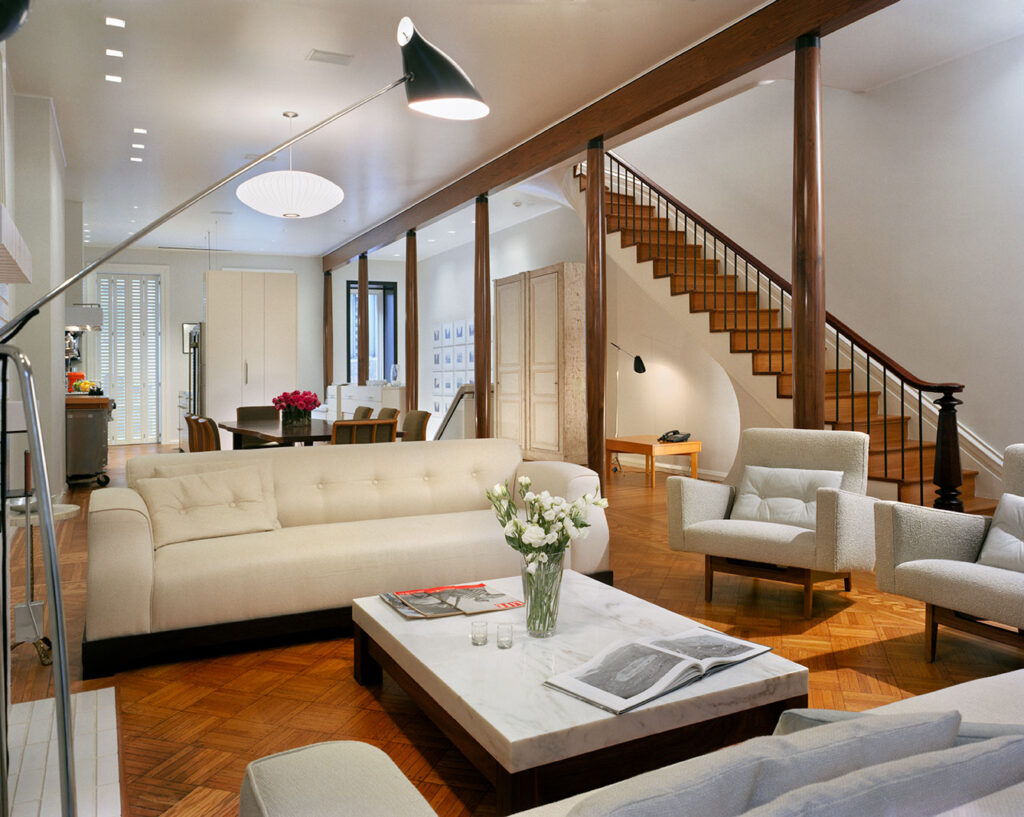
A masterpiece of design and craftsmanship. ✨ The space in the picture above seamlessly blends warmth, modernity, and luxury — where every detail is intentional, and every element tells a story of sophistication.
In short, when you partner with us, you’ll enjoy value engineering in all of our construction builds. Receive excellence, without compromise in every build.
To view more functional, high-end luxury living spaces, we invite you to view our gallery on our Instagram page.
Value engineering in construction is a timeless luxury that’s built to last

Though Lawrence D. Mills, one of the first pioneers of value engineering, died in the 1980s, his contribution to the field of engineering did not go to waste.
Value engineering in construction — especially in luxury construction — is one of the most efficient and helpful construction techniques and methodologies for project managers.
The reason is that value engineering helps reduce costs associated with building while also maintaining the vision and functionality of the building project at large. Though many people think value engineering strips stakeholders of their vision and project, value engineering provides stakeholders with a technique for creating leaner outcomes with maximal value.
That’s what we believe at Scordio Construction, Inc. All of our builders, architects, and designers are of the mindset that you can have your cake and eat it, too.
In other words, you can spend the time to value-engineer a flawless, long-lasting, and functional luxury finished product without blowing your budget. All of our team members are skilled in the latest construction methods and have been trained in and are familiar with the project concept of value engineering.
If you’re looking for a top-quality team that provides exceptional value, integrity in every interaction, adherence to strict timelines, and no hidden costs, we invite you to explore our luxury building firm.
If you’re interested in building or working with us, please reach out to us here. Let’s make your vision a reality.
Scordio Construction: Value Engineering and Building Timeless Homes for 40+ Years

- Need-to-Know Information About Refinishing Wood Floors (in NYC) - February 28, 2026
- How to Make Stained and Oak Kitchen Cabinets Look Modern - January 30, 2026
- What Makes a Door Fire-Rated in Home Construction (NYC Edition)? - December 31, 2025