
If you’re building a home or luxury apartment in the heart of the Big Apple, you’re going to want strong, sturdy doors that can withstand the elements. Cue fire-rated doors. What makes a door fire-rated in the first place?
Understanding the components and processes that make up a fire-rated door can help you build a home that’s safe, sturdy, sound, and up to code. Best of all, when installed properly, these doors won’t combust or fail the duration of their fire-rating.
What’s more, standard fire ratings vary from 20 to 180 minutes depending on the code criteria, so understanding the difference between the different types of fire-rated doors is crucial when picking out fire-rated doors.
If you’re curious about fire-rated doors for your home in New York City, you’ve come to the right place. In this article, we’ll discuss everything under the sun about fire-rated doors, including:
- How to know if a door is fire-rated
- The basics of fire-rated door labels
- Fire-rated glass door labels
- The difference between fire-protective and fire-resistive door assemblies
- Information about the fire rating of door frames and glass doors
- Information about the labels of fire-rated doors and fire-rating classifications
- Fire partitions versus fire barriers
- What makes up a fire-door
- Components of a fire door and what can compromise them
What are fire-rated doors?
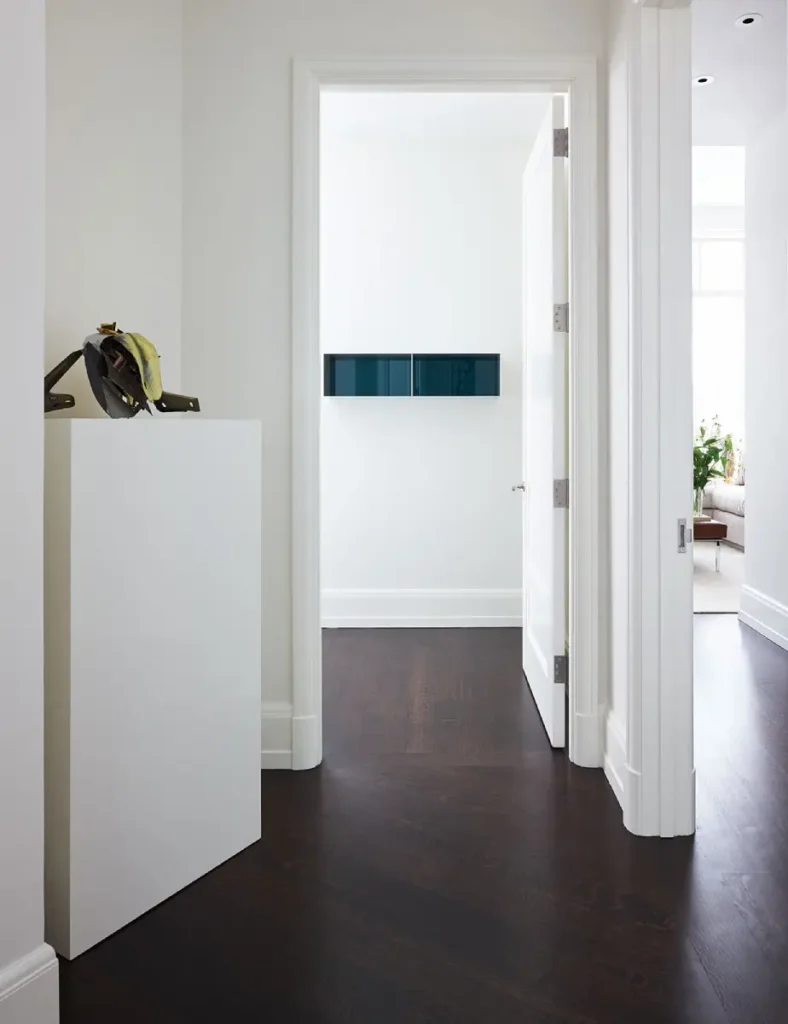
Before we talk about fire-rated doors, let’s set the record straight about fire-rated construction. Fire-rated construction is about protecting people and property, not just satisfying a line item on a construction checklist.
It’s also about containing fire and smoke long enough for people to escape and for emergency fire personnel to respond in an adequate amount of time. Here in New York City, the right combination of walls, doors, frames, hardware, and construction project management is what makes a fire-rated door possible.
In essence, fire-rated doors are made of materials that work to slow or stop the spread of flames, smoke, and heat. These doors include hardware, glazing, components, and assemblies so that, when installed, these doors won’t combust or fail for the duration of the fire rating.
What’s more, fire-rated doors are self-closing. They must remain closed during a fire to protect egress from an apartment.
Though fire-rated doors are often more common in commercial buildings than in residential buildings, they’re often used in lobbies, storefronts, stair wells, and exits to meet code requirements and enhance occupant safety.
Finally, fire-rated doors help protect against ballistics, forced entry, and explosive blasts. But, it’s worth noting that a fire-rated door only works when the entire wall assembly is rated.
The door itself doesn’t offer fire protection. The fire protection comes from the wall, and the door simply protects the opening within that fire-rated wall.
In other words, if you build a home with a fire-rated door in a non-rated wall, you won’t achieve the results you’re looking for with fire safety. If the wall burns, the fire and smoke will go around the door and enter the home, therefore nullifying the utility of your fire-rated door.
What makes a door fire-rated?

Being able to identify fire-rated doors is key to not only ensuring a building or home is up to code, but also that if you make changes to the door, the fire rating will still hold.
To identify a fire-rated door, you’ll need to ensure that the door is fitted with a fire label from an approved agency. You can find these labels in a few different places, which is the topic of our next conversation.
Check the location and modification of fire-rated door labels
A fire label is often located on the hinge side of a fire-rated door, but it’s also located on the top or bottom of a door. Sometimes, the label will be engraved, and so you can find it on raised surfaces.
If these labels aren’t found, the door isn’t likely fire-rated.
Nonetheless, if a fire-rated door is changed, to remain a fire-rated door, ensure that component modifications meet the fire-rated criteria and fire protection needed to ensure the fire-door rating remains the same.
Check for fire-rated glass door labels
Some fire-rated doors incorporate glazing to make the doors more visible. To help make them seen more easily by first responders, fire-rated labels may be etched into the bottom of the glass in the right, left, or upper corners of the glass.
On each fire-rated glass label, you’ll find the product name, basic characteristics of the glass, information about compliance with safety requirements, and information for testing agencies.
Familiarizing yourself with each will help you know what kind of door you have or would like to buy. Speaking of types of doors, let’s take a look at two of the most common fire-rated doors, fire-protective and fire-resistive door assemblies.
Fire-protective vs. fire-resistive doors: what’s the difference?
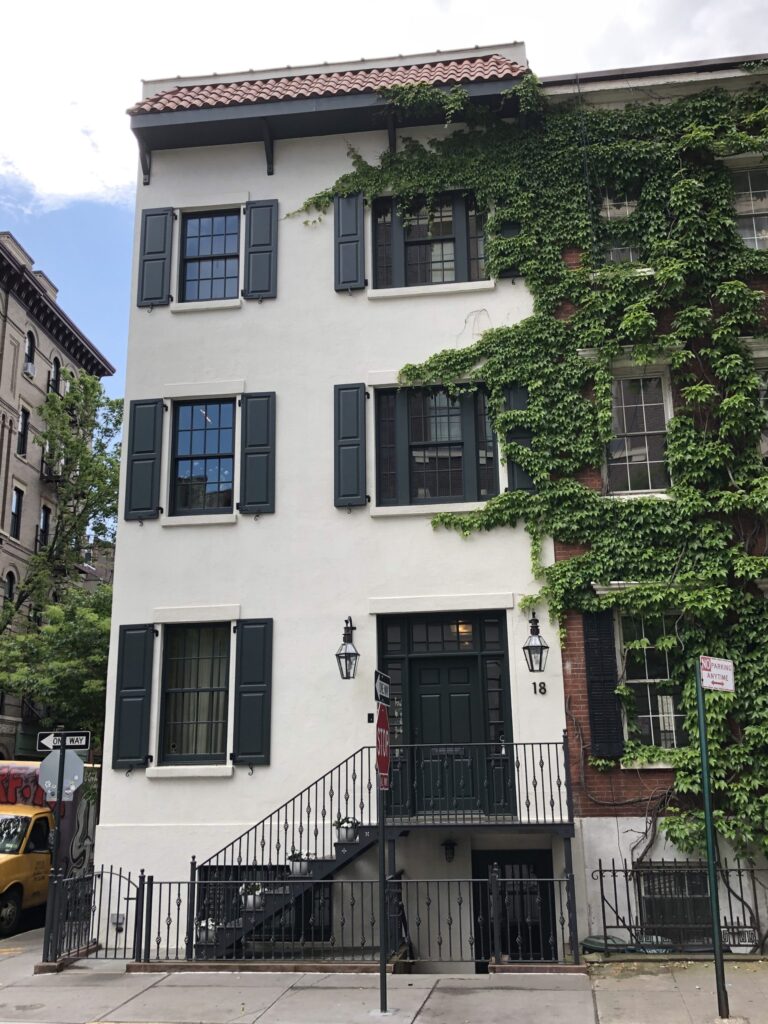
Some of the most common types of fire-rated doors are fire-protective and fire-resistive doors. Note that fire-rated performance depends on the entire assembly of the door.
Yes, that means wall assembly must match a tested design, joints must be sealed, penetrations should be fire-stopped, and all hinges, closers, and latches must be fire-labeled.
What’s more, self-closing and positive-latching must be used. If doors are modified, or if they’re cut, drilled into, or trimmed, they may not be classified as fire-rated.
Fire-protective doors protect against the spread of flames and smoke, not just heat. In contrast, fire-resistive doors provide defense against flames and smoke, but also added protection against radiant and conductive heat.
Also, fire-protective and fire-resistive doors differ from temperature-rise doors in that the latter refers to doors that limit heat from reaching 450 degrees Fahrenheit to the non-fire side of the door after 30 minutes of a fire. Temperature-rise doors help people pass by a door to an exit of a building if temperatures reach high levels on the side of the door with the fire.
Fire-rated glass doors
Note that fire-rated glass exists as well. Fire-rated glass works with an fire-rated door and lite kit, frame, and hardscape to provide fire protection to homeowners. In fact, fire-rated glass doors are available with fire ratings from 20 to 90 minutes.
Fire-rated glass is comparable in quality to the surface quality of regular window glass. As part of our exploration of fire-rated doors, let’s take a look at what makes up their frames.
Fire-rated door frames
A fire door is only as helpful as its frame. In fact, many door frames are made with hollow-metal steel, though new frames are also made with aluminum or carbon steel.
Fire-rated door frames are affixed with permanent labels that reveal information about their original construction, their fire rating, and whether the frame carries a temperature-rise rating. Let’s take a look at other key information found on the label of fire-rated door assemblies.
The importance of the label of fire-rated doors
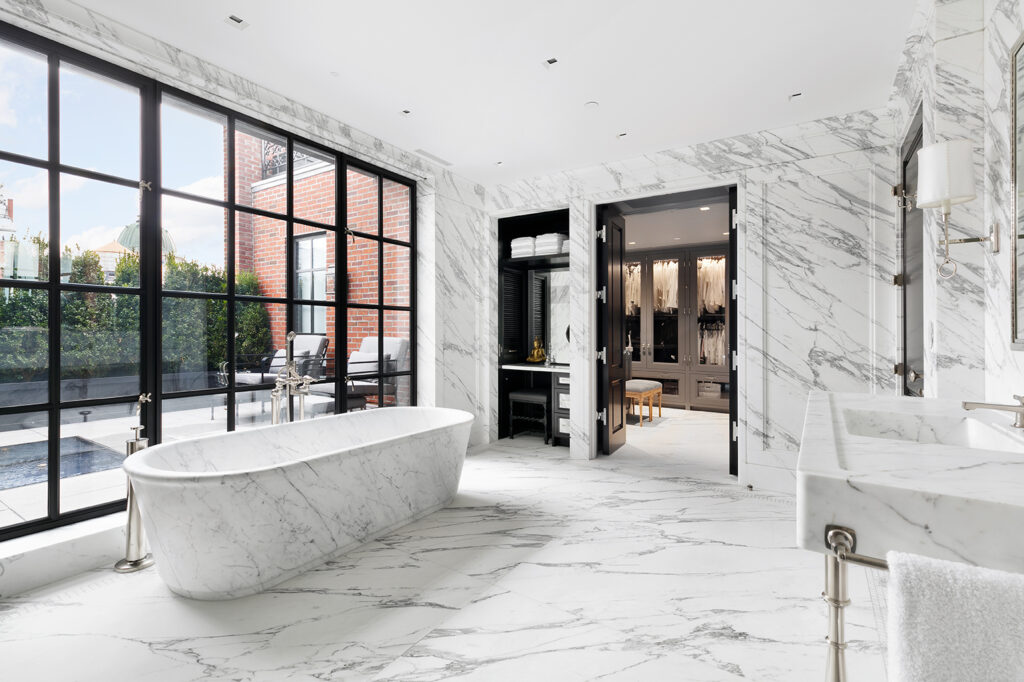
Fire-rated door labels list the exact specifications of a door’s fire rating, which can be supremely helpful for making repairs. The two most common types of labels that exist are:
- Traditional fire-rated door labels
- Non-conventional fire-rated glass labels
Let’s take a look at each in greater detail in the following sections.
1. Conventional fire-rated door labels
Conventional fire door labels indicate what’s called a temperature-rising rating. A temperature-rising rating represents the expected surface temperature on the side of the door that isn’t exposed to a fire after 30 minutes of exposure.
An “S” letter on the door indicates if the door is smoke-rated. The smoke rating is elaborated on at greater length in the National Fire Protection Agency’s (NFPA) NFPA 80 standards.
2. Modern fire-rated glass labels
In contrast to conventional fire-rated labels, modern fire-rated glass labels also exist. Fire-rated labels for glass windows indicate which fire tests the glass has passed. You’ll find the following letters on fire-rated glass labels.
- “W”: W stands for walls. This letter tells us that the fire-resistence-rated glazing meets the wall assembly’s criteria.
- “OH”: OH stands for openings, which indicates that fire-rated glass meets fire window assembly criteria, including what’s called a hose stream test.
- “D”: D indicates that the fire-rated glass adheres to all criteria for fire door assembly.
- “FC”: FC stands for floors and ceilings. This acronym indicates that the glazing meets all floor and ceiling criteria.
- “H”: H stands for hose stream test. The hose stream test addresses the glazing of the door.
- “T”: T stands for temperature. If the door meets 450-degree Fahrenheit temperatures for 30 minutes.
The final number is a two to three-digit number, which shows fire resistance or protection in minutes, such as 45 minutes, 60 minutes, 90 minutes, or 120 minutes. Let’s see how this relates to the construction of fire doors.
Fire partitions vs. fire barriers
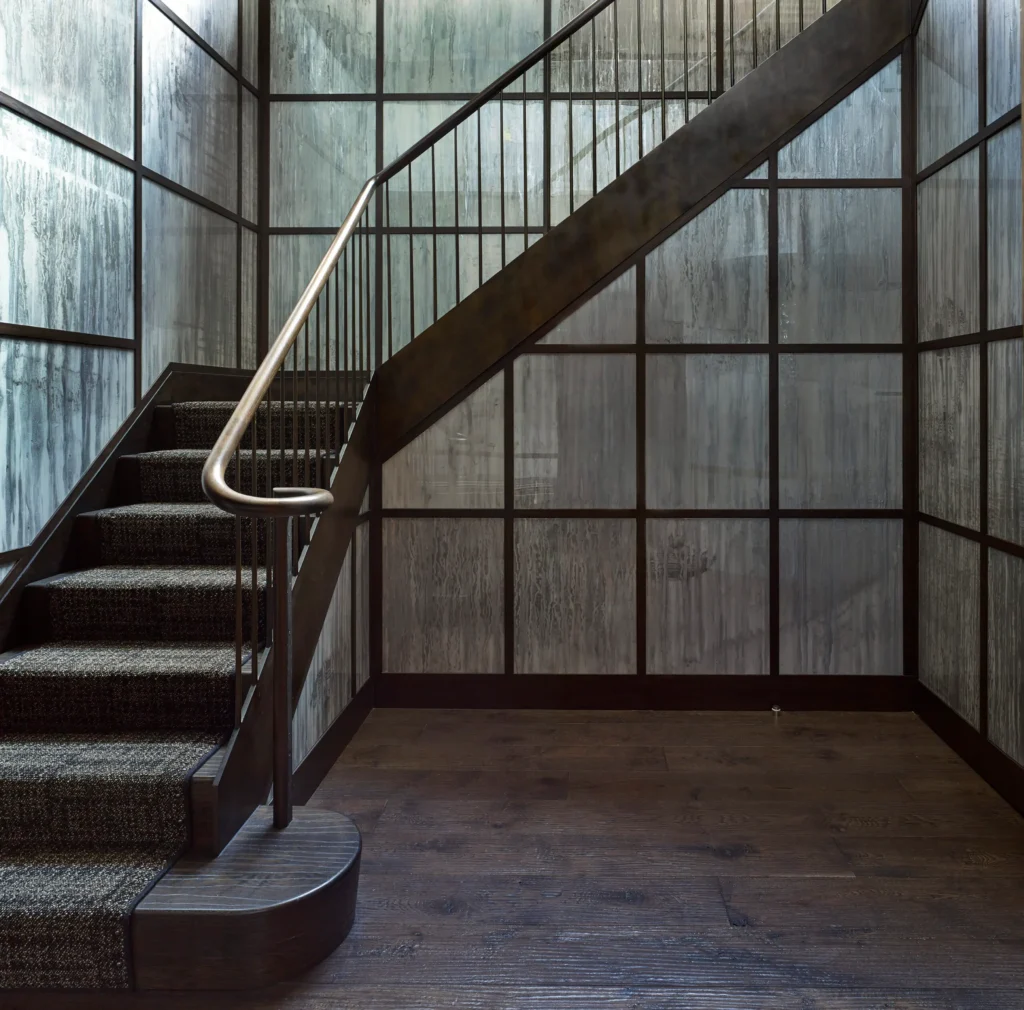
In addition to fire-rated doors, fire partitions and fire barriers exist.
- Fire partitions: Fire partitions are common fire-rated walls inside building corridors or apartment entries that help stop the spread of fire within a building.
- Fire barriers: Fire barriers are stronger separations around stairs, shafts, and high-risk rooms.
The type of fire-rated door you build will depend on the type of wall you’re building. In other words, the wall and the fire rating will determine what type of door opening that’s needed.
Which areas of a home are fire doors installed in New York City?
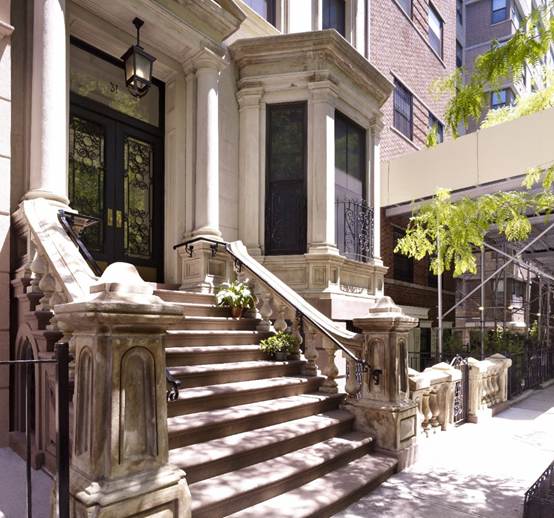
You can find fire doors in all of the following places in New York City homes:
- Garage to dwelling separations
- Parting walls between neighboring buildings or townhouses
- Enclosed stairs and exit routes
- Corridors serving multiple apartments
- Mechanical, boiler, electrical, and other utility rooms
- Duct shafts and elevators
- And more
The reason that these areas are protected with fire-rated doors is that these areas are opportune places for fire and smoke to travel. By building fire-rated infrastructure, you can reduce the path of travel for fire and smoke and give occupants time to evacuate safely.
Fire ratings explained in greater detail (plus examples)
When looking at the spread of fire and smoke, the fire ratings discuss how long a door will last before being exposed to smoke and fire.
Here are a few examples to illustrate what fire ratings look like and how they’re applied:
- 20-minute fire-rated doors: These doors are certified to resist fire and smoke for up to 20 minutes. They’re often used with limited interior applications.
- 45-minute fire-rated doors: These are commonly used with 1-hour fire-rated partitions. You’ll find these doors in corridors or in entryways to buildings.
- 60-minute fire-rated doors: These doors are used in areas where rooms are more exposed to hazardous or demanding conditions. Rooms that house mechanical or utility equipment often use 60-minute fire-rated doors.
- 90-minute fire-rated doors: These rooms are used with two-hour fire-rated walls. Think elevator shafts, stair enclosures, and refuse rooms.
In New York City, especially, the fire rating of the wall dictates the door’s fire rating, not the other way around. Let’s take a look at some of the other criteria that define what it is to have a door that’s “fire-rated.”
The structural components of a fire-rated door
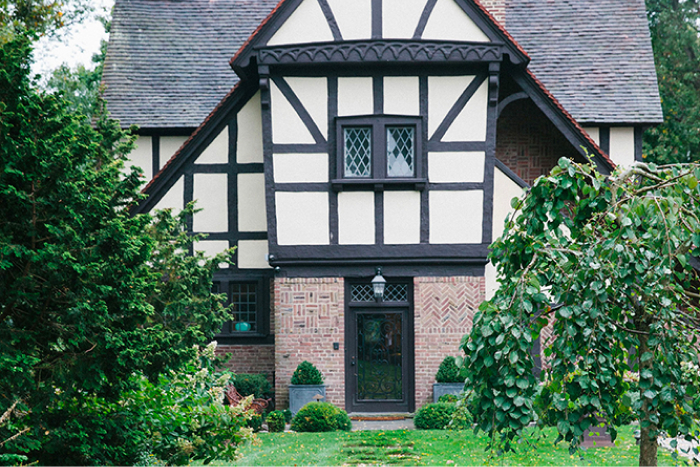
To make fire-rated doors a bit more concrete, we thought we’d explain the exact components that make up a fire-rated door. Fire-rated door requirements include:
- Underwriter Laboratories (UL) or equivalent label with a time rating (such as “20-minute fire-door rated” or “60-minute fire-door rated”)
- A fire-rated frame
- A self-closing device
- Positive-latching hardware
- Appropriate gasketing
- No unauthorized field modifications
- Installation in a tested/rated wall assembly space
In other words, fire-rated doors are constructed of materials, seals, and hardware with a fire-resistant core that expands to seal, slow, or stop the spread of flames.
While fire-rated doors are durable, several factors can compromise their integrity.
Ways that fire safety infrastructure can be compromised
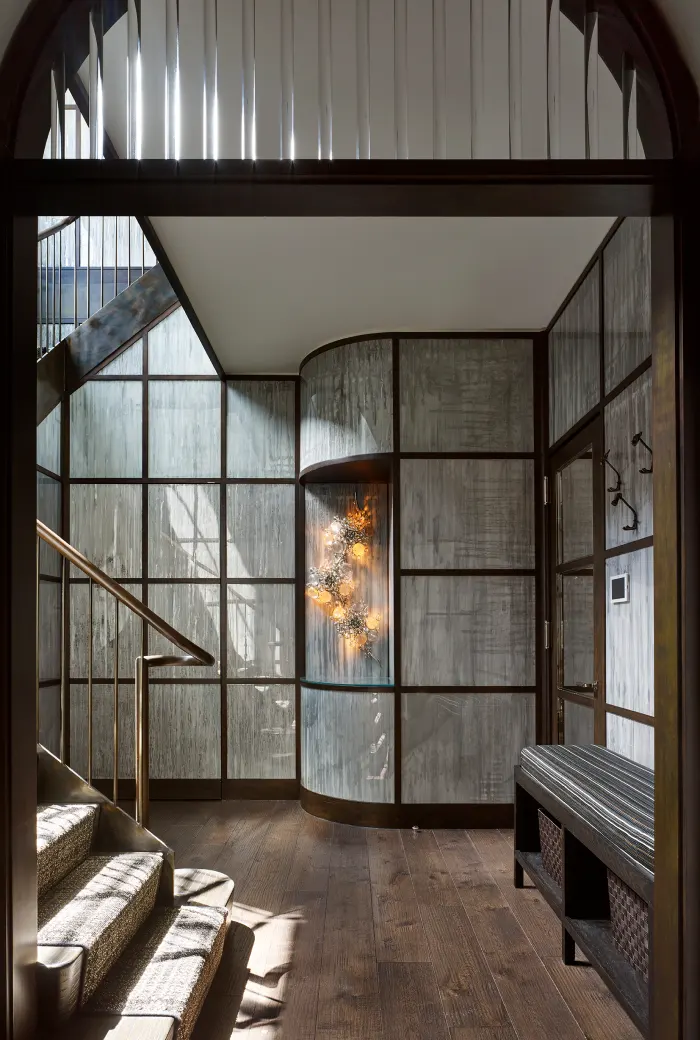
Though they stand the test of time against fiery Mother Nature, fire-rated equipment still can, alas, be compromised. Some of the many ways that can affect their durability, fire rating, and strength are through the following real-world examples:
- Doors that are trimmed shorter than needed to clear finished floors
- Non-fire-rated hardware that’s swapped in place of traditional fire-rated pieces
- Doors that are propped open and don’t self-close
- Making structural adjustments like recessed lighting or unapproved millwork that could affect the infrastructure’s fire rating
Fire ratings are susceptible to change if other aspects of the infrastructure are adjusted, so you’ll always want to check with local authorities and a trusted high-end luxury construction firm before commencing with changes to your existing infrastructure.
Install your fire-rated doors with confidence
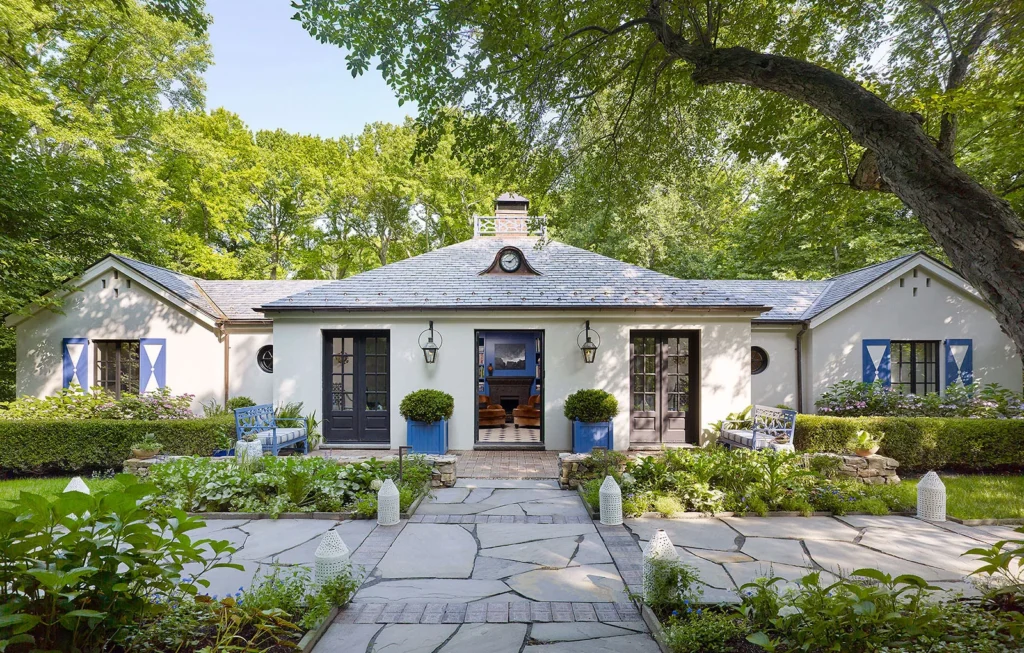
Did you know that though room temperatures might be 100 degrees Fahrenheit at floor-level, they may rise to over 600 degrees Fahrenheit at eye level, according to the U.S. Fire Administration?
All the more reason they need to be coordinated and installed with precision and care so they perform as intended. Most importantly, they’re built to keep people safe and protect property from potential damage.
When built with a luxury construction firm, you can ensure that every detail will be checked and inspected with utmost care and at the highest level.
At Scordio Construction, we’ve been building custom high-end luxury homes, complete with fire-rated assemblies, for more than 40 years. If you’re looking for a general contractor with some experience in fire assembly, look elsewhere.
But, if you’re looking for a top-of-the-line luxury construction team that delivers top-quality products on-time every time, look no further. To learn more about our high-end residential construction projects, contact us today. We’d be happy to walk you through your options.
Scordio Construction, Inc.: Top-Rated Fire-Rated Doors and Luxury Construction Since 1985

- Need-to-Know Information About Refinishing Wood Floors (in NYC) - February 28, 2026
- How to Make Stained and Oak Kitchen Cabinets Look Modern - January 30, 2026
- What Makes a Door Fire-Rated in Home Construction (NYC Edition)? - December 31, 2025